
Rug Cleaning in St. Armands
Collection and delivery in St. Armands are included. We take the rug back to the workshop, wash it properly, and bring it home.
What St. Armands is built from
St. Armands Key, bought by John Ringling in 1917, laid out with the Circle at its centre and joined to the mainland by the causeway that opened in 1926. Short residential blocks radiate off the Circle — 1950s and 1960s houses, later rebuilds and small condominium buildings — with the shops, galleries and restaurants in the middle.
Walkable, split between long-tenured owners and winter residents, and unusually well supplied with places to buy a rug. A great deal of what is on these floors was bought locally and secondhand: an estate sale, an auction, a dealer's back room.
The St. Armands problem
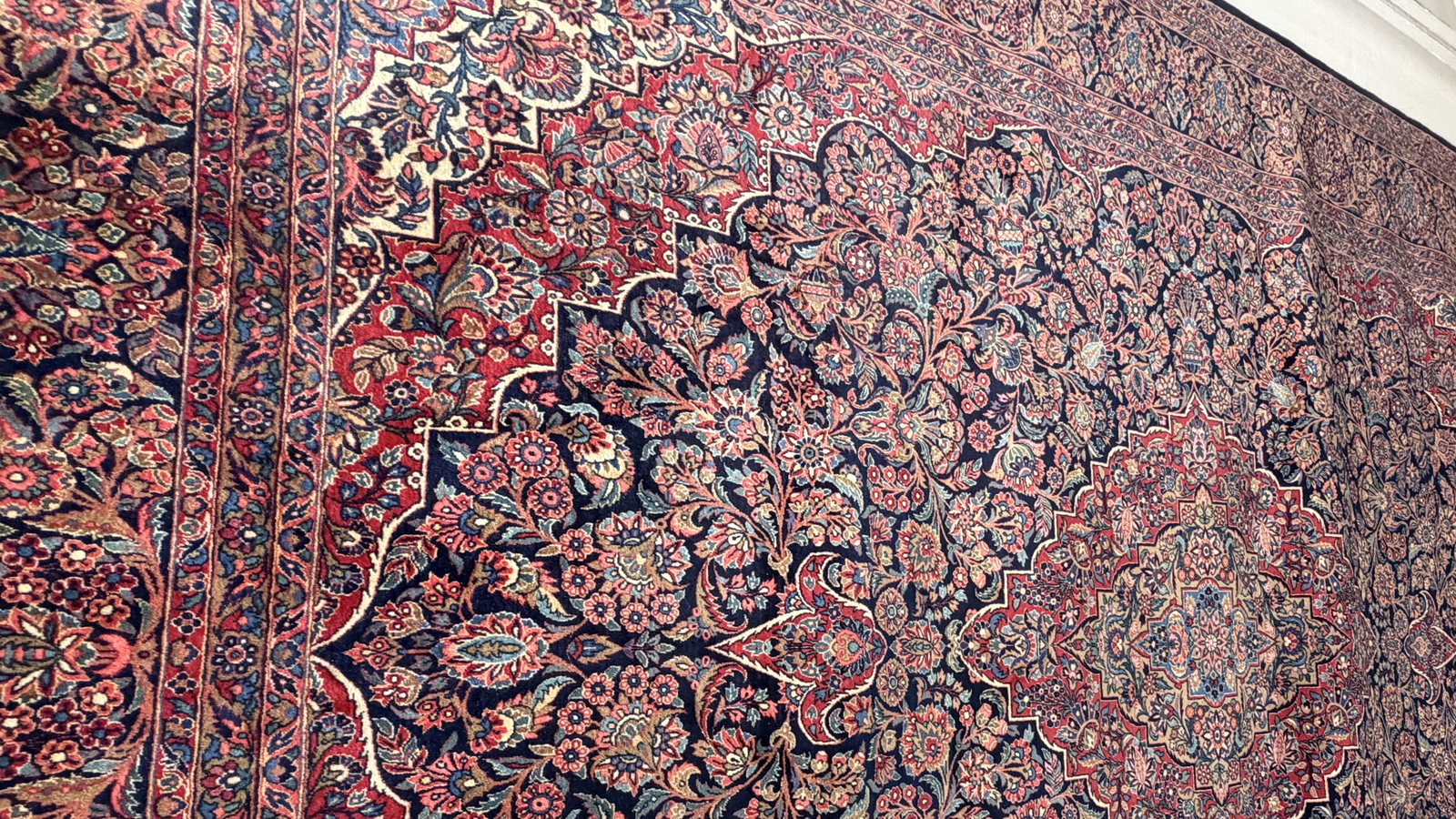
The problem on this key is provenance. A rug bought new from a mill has a known history; a rug bought at an estate sale two streets away has none, and what has already been done to it decides what can safely be done next. Three things turn up over and over. Rugs given a tea wash or a colour wash somewhere in their past to make them look older and warmer, where the applied colour is fugitive and comes away the moment it meets water. Rugs whose worn spots have been touched in with a marker or a dye pen, which is convincing under a lamp and runs in a wash. And rugs carrying an earlier repair that has to be undone before anything else can start — a glued-on backing, a taped edge, a machine-serged side put straight over a hand-wrapped selvedge. None of it is visible from across a room, and all of it turns up in the dye test and the intake inspection, which is precisely why both happen before any water.
If that sounds like your rug, send the form and describe what you are seeing. We will tell you whether it needs the full treatment or not.
We collect from these too
Ready when you are, St. Armands
Free inspection, free collection, and a real number before anything starts.